
Red Root Floaters
Original price was: $12.99.$9.99Current price is: $9.99.
- Common Names
- red root floater, floating spurge, apple duckweed
- Scientific Name
- Phyllanthus fluitans
20 in stock. Ships from Richmond, BC.
Note: Pictures are for reference only, and may not look exactly the same.
Description
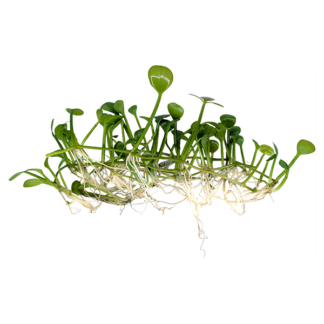
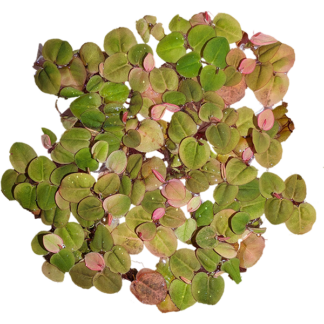
The Red Root Floater, *Phyllanthus fluitans*, is a popular and visually stunning aquatic plant cherished for its vibrant red roots and delicate, floating leaves. Native to the Amazon River Basin in South America, this free-floating perennial adds a unique aesthetic and offers numerous benefits, such as water filtration and providing shelter for fish fry and shrimp. Its care is relatively easy, making it suitable for beginners.
There is a secret usage of this plant, that is not so commonly used in the aquarium hobby. One of the most amazing aspects of the red root floaters is its ability to turn red with the lack of nitrogen. This is a great indicator the tank has excess nitrogen problems as it will remain green! With bright light and low nitrogen in the water, the surface of the leaf will become deep red in color. It is a biological water tester!
Care
Caring for Red Root Floaters is relatively easy. They thrive in temperatures from 70-82°F (21-28°C), a pH of 6.0-7.5, and soft to moderately hard water (2-15 dGH). As heavy feeders, they benefit from liquid fertilizer rich in iron to enhance their red coloration. Gentle water flow is crucial, as strong surface agitation can damage the delicate leaves and roots. Prevent the tops of the leaves from staying wet to avoid melting.
Propagation
Propagation is straightforward. The plant primarily reproduces vegetatively by sending out runners that develop into daughter plants. These new plants will eventually break off on their own. Aquarists can also manually propagate them by splitting the mature stalk between clusters of leaves and roots. Sexual reproduction via seeds is rare in home aquariums.
Trimming
Due to its rapid growth, the Red Root Floater can quickly cover the water surface. Regular trimming and removal of excess plants are necessary to manage its spread and ensure light can reach the plants and inhabitants below. Discard clippings properly to prevent them from decomposing in the tank and affecting water quality.
Notes, Tips, and Considerations
- Under intense lighting, the leaves develop a deep red hue.
- A potassium deficiency may be indicated by small holes in the leaves.
- The plant can absorb CO2 directly from the air, so supplementation is not required.
Naturally Found
- Regions
- South America
- Countries: Brazil, Colombia, Ecuador, Peru, Bolivia, Venezuela, Paraguay, Argentina
- North America
- Directions: South
- Countries: USA, Mexico
- South America
- Environment
- Habitat: river, pond, marsh, wetland
- Water Type: freshwater
- Water Depth: 0.05 – 5 m
- Water Flow: still, slow
- Light: high
- Temperature: 21 – 28 °C
- Humidity: high
- Substrate: floating