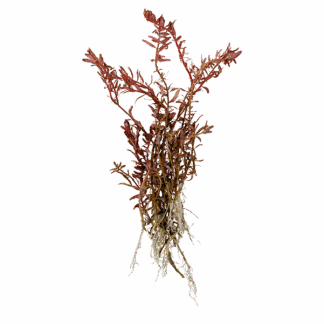


Java Moss
$12.99
- Common Names
- Java moss, Bogor moss
- Scientific Name
- Taxiphyllum barbieri
More are being grown and will be available soon!
To inquire about availability or to pre-order, please contact us.
Description
Taxiphyllum barbieri, recognized in the aquarium trade as Java moss, is a creeping aquatic moss native to Southeast Asia. It exhibits irregular, branching green stems populated with small, overlapping oval leaves. In its natural habitat, it grows on damp soil, rocks, and tree trunks along riverbanks, often extending into the water. In the aquarium, it relies on small root-like appendages called rhizoids to anchor itself to rough surfaces.
Care
Maintain low to moderate light and stable water temperatures between 20-28°C. Java moss extracts nutrients directly from the water column and grows without carbon dioxide injection or a nutrient-rich substrate. Attach small clumps to wood or rock using cotton thread, fishing line, or cyanoacrylate gel. As the plant grows, the rhizoids will adhere to the underlying surface. In environments with high light and slow water movement, filamentous algae may grow entangled within the branching stems.
Propagation
Propagate Java moss by mechanical division. Separate an existing mat into smaller clumps by pulling or cutting the stems apart. Attach the separated sections to new surfaces, where they will resume branching and form new mats over time.
Trimming
Trim the moss using curved scissors when the mat becomes excessively thick. Removing the outer growth layers prevents the underlying base from dying due to light deprivation and reduced water flow. Siphon away the severed segments to prevent them from reattaching and growing in unintended areas of the aquarium.
Appearance
- Shape: epiphytic, floating, carpet
- Size: medium
- Can Grow To: 15 cm tall
- Color: green
Notes, Tips, and Considerations
- The dense, tangled structure of the stems acts as a physical barrier and resting place for small aquatic organisms, such as shrimp and fish fry.
- Detritus and uneaten food naturally accumulate within thick sections of the moss. Agitating the mat gently during water changes prevents localized buildup of organic waste.
- Cotton thread used to secure the plant usually deteriorates within a few weeks, which aligns with the time required for the rhizoids to establish a firm grip on the hardscape.
Naturally Found
- Regions
- Asia
- Directions: South, East
- Countries: Vietnam, Indonesia, Malaysia, Philippines, Singapore
- Asia
- Environment
- Habitat: river, swamp, marsh, wetland
- Water Type: freshwater
- Water Depth: 0 – 3 m
- Water Flow: still, slow, moderate
- Light: low, medium, high
- Temperature: 15 – 30 °C
- Humidity: medium, high
- Substrate: rock, mud, soil, gravel