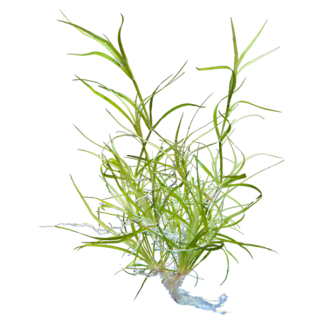
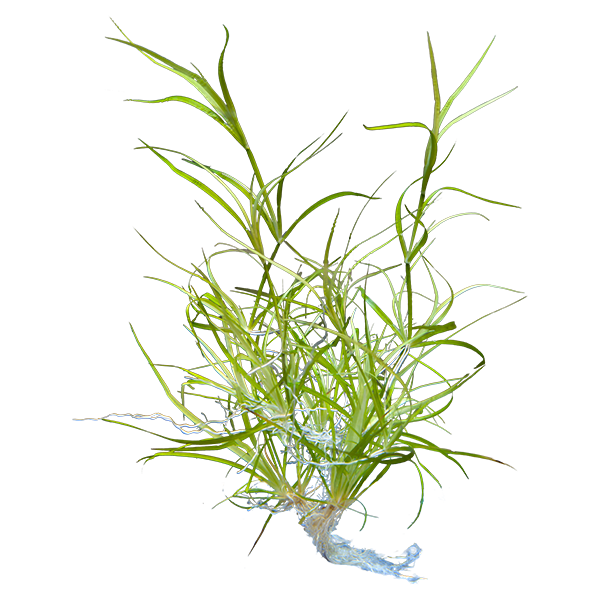
Juncus repens
$12.99
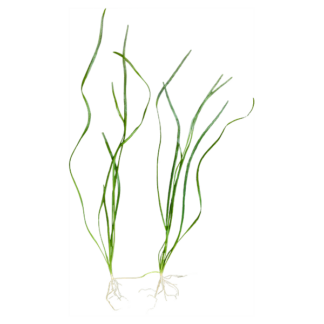
A grass-like rush with flattened basal leaves and upright or creeping shoots that root at nodes. In aquariums it forms low to medium groups in the foreground or midground and is trimmed to keep the stand dense.
- Common Names
- creeping rush, lesser creeping rush
- Scientific Name
- Juncus repens
2 in stock. Ships from Richmond, BC.
Note: Pictures are for reference only, and may not look exactly the same.
Description
Juncus repens, in the family Juncaceae, is commonly called creeping rush or lesser creeping rush. It is native to the southeastern United States, eastern Mexico, and Cuba, where it grows on pond and lake shores, in swamps, marshes, ditches, and other shallow freshwater wetlands. The species has flat, grass-like leaves 2 to 10 cm long and 1 to 3 mm wide, while flowering stalks are cylindrical and smooth. Stems first ascend, then become arcuate-stoloniferous and creep or float, rooting at nodes. In the aquarium, the submersed form grows as a loosely upright stem-like plant with tufts of narrow leaves. Under moderate light it is green; under strong light and adequate micronutrient supply it can develop reddish-brown tones. Growth is moderate and the plant tolerates a range of aquarium conditions, with stronger growth under medium to high light, CO2 addition, and complete nutrient supply.
Care
Plant Juncus repens in gravel, sand, or soil in the foreground or midground, or in the background where taller groups are wanted. Provide medium to high light. Under moderate light plants remain green, while strong light and micronutrient supply can bring out reddish-brown color. Temperature ranges are ideally 10 to 26°C; pH is 5 to 7, carbonate hardness 0 to 14 dKH, and general hardness 0 to 30 dGH. CO2 is not required in all setups, but 20 to 30 mg/L to support fuller growth. Supply complete macro- and micronutrients. Long-lived leaves can develop green spot algae, so maintain flow and remove affected older leaves.
Keep the stand trimmed to about 20 to 30 cm if a low group is intended. Without trimming, shoots can reach the water surface and form a dense mat, and lower portions can become unsightly.
Propagation
Propagate by cuttings of shoot tops or rosette-like side shoots. Cut the upper part of a shoot below a leaf cluster and replant it; the cutting does not need roots to start. The plant also produces adventitious plants on the leaves, and division or splitting of established stands can be used. Replant cuttings in the substrate or allow them to root among existing stems.
Trimming
Trim shoot tops regularly to keep the group bushy and below about 20 to 30 cm. Cut stems above a leaf cluster; the removed tops can be replanted as cuttings. Remove older lower leaves if they develop green spot algae or become shaded and unsightly. Without trimming, shoots reach the water surface and form a dense mat, with lower parts declining.
Appearance
- Shape: stem, carpet
- Size: medium
- Can Grow To: 30 cm tall
- Color: green, becoming reddish-brown under strong light and micronutrient supply
Notes, Tips, and Considerations
-
CO2 is not necessary, but 20 to 30 mg/L helps for fuller growth.
-
The emersed form creeps over wet substrate and roots at nodes. Flowering and fruiting occur mainly when water levels are low, from June to October in the southeastern United States.
-
Under strong light, older leaves can develop green spot algae. The plant has long-lived leaves and moderate growth, so routine removal of affected leaves is useful.
-
In aquariums, untrimmed shoots can reach the surface and form a dense mat. Lower shaded portions may decline; trim before shading becomes severe.
Naturally Found
- Regions
- North America
- Directions: South, East
- Countries: United States, Mexico, Cuba
- North America
- Environment
- Habitat: swamp, marsh, pond, lake, wetland
- Water Type: freshwater
- Water Depth: 0 – 0.5 m
- Water Flow: still, slow
- Light: medium, high
- Temperature: 4 – 28 °C
- Humidity: high
- Substrate: mud, soil, sand
Related products
-
 BeginnerForegroundMidground
Hydrocotyle verticillata
$13.99 Add to cart -
Sale!
 BeginnerBackground
Water Sprite
Ceratopteris thalictroidesOriginal price was: $11.99.$6.99Current price is: $6.99. Add to cart -
Sale!
 BeginnerBackground
Vallisneria nana
Original price was: $12.99.$8.99Current price is: $8.99. Add to cart