Description
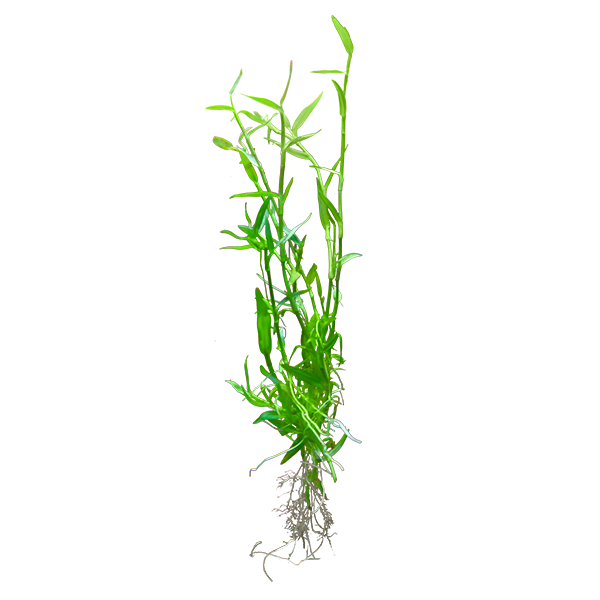
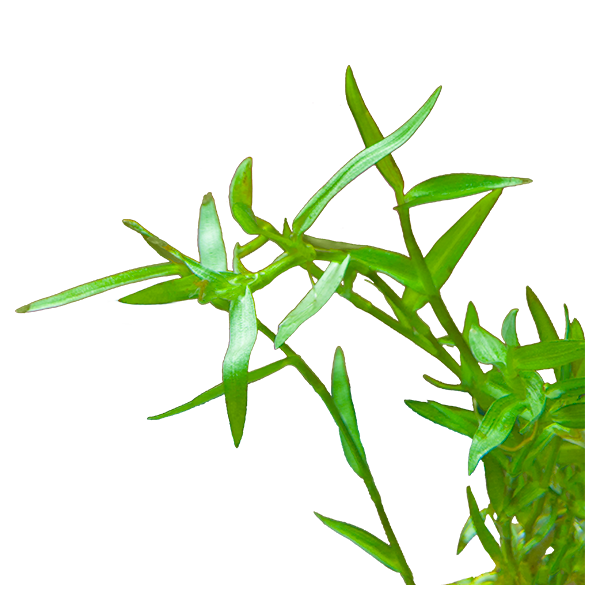
Murdannia keisak is a stem plant with narrow, light green leaves, often exhibiting purple hues, that are arranged in an alternate, two-line pattern along the stem. Underwater, the stems are strictly upright with pronounced nodes, giving them a bamboo-like appearance. The leaves typically grow up to 5 cm long and 1 cm wide, with stems around 3 mm thick. In its emerged form, the stems can be low-lying to ascending. Small, three-petaled flowers, which can be white, pink, blue, or purple, may bloom in late summer to early fall.
Care
Murdannia keisak is considered to have a medium to moderate difficulty level for care in an aquarium setting. Adequate nutrient levels are beneficial for healthy growth, and a substrate rich in nutrients is recommended.
Propagation
Murdannia keisak can be propagated through seeds, cuttings, and division. Stem cuttings are a common method; healthy stems should be cut below a node, the lower leaves removed, and the cutting placed in water or moist soil/soilless mix until roots develop. Division of mature plants can be done in early spring. The plant can also reproduce vegetatively from stem and root fragments.
Trimming
Murdannia keisak is a fast-growing plant that requires regular trimming to maintain shape and encourage bushier growth.
Notes, Tips, and Considerations
- In some areas, Murdannia keisak has become naturalized and is considered invasive due to its ability to spread aggressively and outcompete native vegetation, forming dense mats.
- Reddish shoot tips can develop under strong light and CO2 supplementation.
- Emersed plants may produce small white, pink, blue, or purple flowers in late summer to early fall.
Origin
- Regions
- Asia
- Directions: East, South
- Countries: China, Japan, Korea
- Asia
- Environment
- Habitat: marsh, river, lake, pond, wetland
- Water Type: freshwater
- Water Depth: 0.1 – 0.5 m
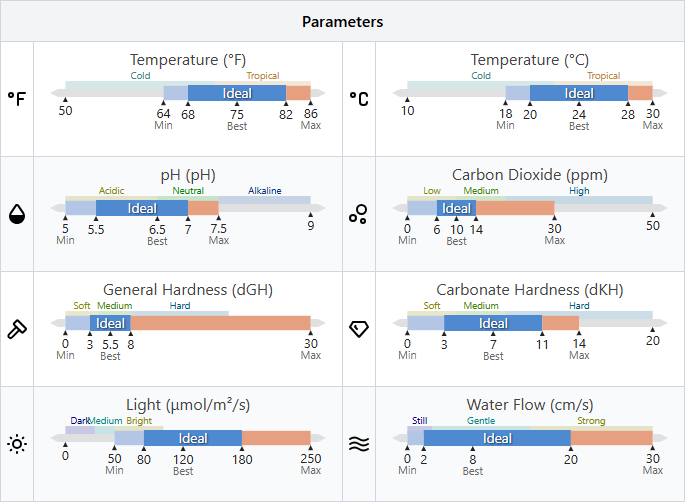
- Water Flow: still, slow, moderate
- Light: medium, high
- Temperature: 18 – 30 °C
- Humidity: high
- Substrate: soil, mud
Closing
Murdannia keisak is a versatile and attractive plant for freshwater aquariums, providing dense growth that can offer shelter for small fish and invertebrates.