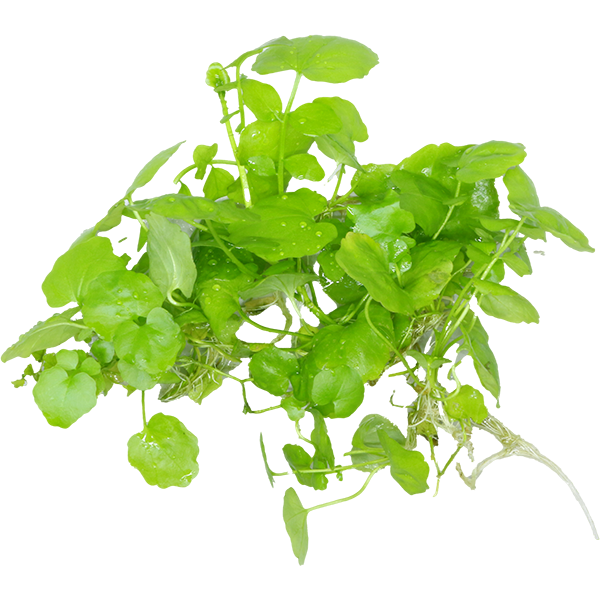
Cardamine lyrata
Original price was: $9.99.$5.99Current price is: $5.99.
Also known as Japanese Cress and Chinese Ivy.
This hydrophyte requires strong light to grow well. CO2 is not necessary but will help tremendously.
- Common Names
- Japanese Cress, Chinese Ivy
- Scientific Name
- Cardamine lyrata
Note: Pictures are for reference only, and may not look exactly the same.
Description
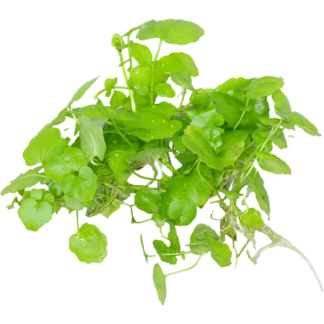
A delicate and fast-growing stem plant, Cardamine lyrata, commonly known as Japanese cress or Chinese ivy, is a popular choice for aquascapers seeking a lush, trailing effect in their freshwater aquariums. With its distinctive clover-like, kidney-shaped leaves on long, slender stems, it creates a soft, flowing appearance. It can be planted in the substrate to form dense bushes or left to float, providing excellent cover for fry and shrimp.
Care
This plant thrives in medium to strong lighting conditions and prefers cooler water temperatures between 15-24°C (60-75°F). It is adaptable to a pH range of 6.0 to 8.0 and soft to moderately hard water (up to 18 dGH). While not strictly necessary, CO2 and a regular supply of liquid fertilizer, particularly one rich in iron, will significantly boost its growth and health. Due to its fragile stems, it is best suited for aquariums with low to moderate water flow.
Propagation
Propagation is straightforward and is accomplished by taking cuttings from a healthy stem. These cuttings can be replanted directly into the substrate, where they will quickly develop roots. Cuttings can even be left to float at the surface, where they will develop roots before being planted.
Trimming
Because it grows so fast, regular pruning is necessary to maintain its desired shape and prevent it from overshadowing other plants. It can be trimmed to form dense bushes in the midground or background, or its trailing stems can be draped over decor.
Notes, Tips, and Considerations
- One of the most common issues with this plant is its sensitivity to high temperatures (above 28°C or 82°F), which can lead to stunted growth and smaller leaves.
- Insufficient lighting can result in leggy, sparse growth as the plant stretches towards the light source.
- If new growth appears transparent but isn’t decaying, it could indicate an iron deficiency, which can be addressed with appropriate fertilization.
Naturally Found
- Regions
- Asia
- Directions: East
- Countries: China, Japan, Korea, Russia
- Asia
- Environment
- Habitat: wetland, marsh, river
- Water Type: freshwater
- Water Depth: 0.1 – 1 m
- Water Flow: slow
- Light: medium, high
- Temperature: 15 – 24 °C
- Humidity: high
- Substrate: soil, mud
Closing
The fast growth of Cardamine lyrata and versatile placement options make it a fantastic choice for aquascapers looking to add a touch of lush, trailing greenery. With proper care, it will bring a soft, natural beauty to any freshwater aquarium.